


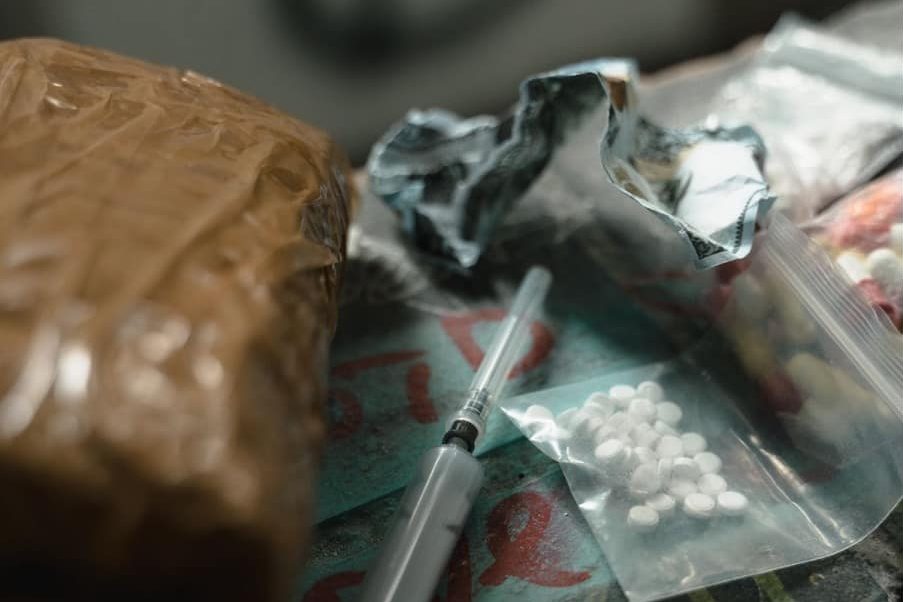
The Narcotics Act (BtMG) regulates, among other things, criminal offenses related to prohibited substances. These are primarily drug offenses, which is why this area of criminal law is also referred to as narcotics law. Unlike other criminal offenses, drug offenses are not regulated in the Criminal Code (StGB), but in a separate law—the BtMG.
The potential penalties should not be underestimated by defendants: in case of doubt, prison sentences of several years may be imposed. In this article, we will show you exactly when you are liable to prosecution and how you should behave when facing a BtMG charge.
Are you being accused of a criminal offense under the BtMG?
Please feel free to contact our specialized law firm for criminal law. Through years of work with defendants in narcotics law, we are intimately familiar with drug offenses and will gladly support you through all stages of the process. We would be pleased to advise you on your legal options in a non-binding initial consultation:
What is the Narcotics Act (BtMG)?
The Narcotics Act (BtMG) regulates the handling of narcotic and addictive substances, in short: narcotics. This includes not only, but especially, prohibited substances such as illegal drugs and intoxicants.
However, substances that can be legally prescribed and purchased in the medical field, for example, can also fall under the BtMG.
The Narcotics Act does not only regulate narcotics law, but generally the handling of addictive substances and those that may only be used in specific areas, such as the medical field. The BtMG therefore does not serve exclusively to punish drug offenses, even if these are probably the best known. Incidentally, not all drugs are found in the BtMG: you will look in vain for legal intoxicants such as nicotine or alcohol.
Narcotics Law: Which actions are punishable?
For defendants, the criminal offenses regulated in the BtMG play an important role. In addition to criminal offenses, it also contains administrative offenses, i.e., low-level offenses that are not prosecuted under criminal law but are nevertheless punished with fines, for example.
In our experience, many people find it surprising that the mere consumption of narcotics is not a criminal offense, nor is it punished as an administrative offense with a fine. Nevertheless, anyone who consumes drugs should not take a criminal charge lightly. The reason: Consumers usually commit other offenses, such as the possession or acquisition of the illegal substance.
Punishable acts under the BtMG (Section 29 BtMG) include in particular:
- Possession,
- Acquisition or procurement in any other way,
- Production,
- Cultivation,
- Trafficking,
- Import or export, sale or distribution of substances without trafficking,
- In particularly serious cases under Section 29a (3) BtMG (imprisonment of not less than one year), e.g., in the case of commercial trafficking. A person acts commercially if they intend to obtain a continuous source of income of some duration and extent from repeated commission of the offense.
Punishable acts under the BtMG (Section 30a BtMG) include in particular:
- trafficking in narcotics in a non-insignificant quantity as a member of a gang (gang-related trafficking).
- trafficking in narcotics in a non-insignificant quantity while carrying a firearm or other dangerous objects (armed trafficking).
The minimum prison sentence here is five years. In less serious cases, six months to ten years.
This is a general list and does not replace individual legal advice. Whether a punishable act exists in your case depends on the circumstances of the individual case and must be reviewed by a criminal defense lawyer.
BtMG: Which drugs are prohibited?
Not all substances regulated in the BtMG are prohibited. The Narcotics Act divides narcotics into 3 categories:
- non-marketable narcotics (Schedule 1),
- marketable but non-prescribable narcotics (Schedule 2), and
- marketable and prescribable narcotics (Schedule 3).
The first category includes substances colloquially referred to as drugs. A list of all non-marketable narcotics can be found in Schedule 1 of the BtMG.
These substances include, among others, cannabis, LSD, magic mushrooms (psilocybin), MDMA (ecstasy), cocaine or even heroin. This list is constantly updated as new substances are established and put into circulation.
What does “Small Quantity” mean?
The specific penalty imposed depends in each individual case on whether the seized substance is a (still) small quantity (Sections 29 (1), 30 (1), 30a (1) and (2) BtMG).
In the case of a non-insignificant quantity, the prison sentence is at least one year. Therefore, a non-insignificant quantity always constitutes a felony (Verbrechen), regardless of whether it is possession for personal use or not.
Good to know: It is not the seized quantity of the substance itself that matters, but the amount of active ingredient content. The limit values are calculated based on the dangerousness of the drug and the quantities required to reach a state of intoxication. The amount of active ingredient content can vary considerably for the same quantity of substance, especially with natural substances (e.g., cannabis or magic mushrooms). Those affected should therefore not feel safe even with small quantities of illegal substances.
Caution: A small quantity found on you does not automatically mean that you will remain unpunished. Even with small quantities, a conviction to a fine or imprisonment can occur, especially if you have repeatedly come to the attention of authorities for drug offenses or have already been convicted.
The legislator has not determined the threshold for a small quantity. However, the Federal Court of Justice (BGH) has defined limit values for a non-insignificant quantity for a variety of substances, which serve as a guide for case law and defense.
The following limit values are of significance:
Substance | “Non-insignificant quantity” in grams |
| Amphetamine | <10.0 amphetamine base |
| Cannabis | <7.5 g THC |
| MDMA | <30.0 for MDE base |
| Heroin | <1.5 heroin hydrochloride |
| Cocaine | <5.0 cocaine hydrochloride |
| 2C-B (Bromodimethoxyphenethylamine, BDMPEA) | <1.0 |
| Methamphetamine (Speed) | <5.0 methamphetamine base |
| Morphine | <4.5 |
It is therefore important to act as early as possible and consult an experienced lawyer to move the proceedings toward a quick dismissal. We advise and represent you with the utmost discretion and within the framework of our attorney-client privilege to avert potential social damage.
Can I replace a punishment with therapy?
In some cases, a deferral of the prison sentence for therapy can take place (Section 35 BtMG). The duration of the therapy is then usually credited toward the prison sentence. The therapy can be deferred for a maximum of 2 years; the remainder of the imposed prison sentence must generally be served. However, the regulations on probation also apply here, so that the remaining prison sentence can be suspended on probation after completing the therapy.
An example: If a prison sentence of 3 years was imposed, one year of imprisonment must still be served after a two-year therapy. However, this is usually suspended on probation.
There are several requirements for the deferral of the sentence for therapeutic purposes (Section 64 StGB):
- Declaration of willingness to undergo therapy by the convicted person
- Consent of the court in the first instance
- No obstacles to deferral (for example, deportation)
Furthermore, therapy instead of a prison sentence cannot be decided during the trial, but is only possible during the enforcement proceedings. Nevertheless, it can be important that an existing addiction is recorded in the judgment by the court. However, a deferral of the sentence is also possible without this finding. For this, a cost commitment for the therapy and an admission confirmation from the facility must be available. If you would like to learn more about this, please contact us directly.
Tips from the Lawyer: How to behave as a defendant in a BtMG charge
The accusation of a criminal offense is often accompanied by great emotional burden and stress for defendants. Concerns are also appropriate due to a potential conviction.
Nevertheless, it is important to react correctly in such a situation and not let your emotions lead you astray. You should never make serious decisions in criminal proceedings, which often involve your future and personal freedom, without legal support.
Here are some general instructions on how you should behave when accused of a BtMG offense:
Do not make a statement
If you believe you are innocent, you may have the desire to justify yourself and make a statement to the police. It is understandable that you would like to clear up the allegation by presenting your side of the story. Nevertheless, we strongly advise against attending a police summons and making a statement.
Defendants are often legal laypeople. They do not have a comprehensive overview of the overall situation. For example, you lack access to the case files, which can only be viewed by a lawyer or criminal defense attorney. Therefore, contact a lawyer specialized in narcotics law and have them cancel the summons appointment.
By undergoing an interrogation, you will very likely incriminate yourself or make statements that you can no longer undo. In the worst case, you thus contribute to your own conviction. Remember that, unlike you, police officers are legally trained to conduct a criminal interrogation and obtain information from you. You should therefore—if at all—only appear for a summons with a lawyer.
Take the accusation seriously
While many people tend to want to explain themselves to the investigating authorities, there are also those who trust that the criminal charge will resolve itself. This path is also not advisable.
An investigation can always take an uncertain outcome. Under certain circumstances, you can also be innocently convicted of a crime. Contact an experienced criminal defense lawyer as soon as you first learn of an accusation against you. Only then can they intervene early in the proceedings in your favor and potentially achieve a dismissal, a reduction in sentence, or an acquittal.
Stay calm during searches
Even if you do not like it, you must tolerate a search of your home. In any case, ask to see the search warrant and demand proper documentation of the seized items and documents.
Behave cooperatively, but do not actively assist in the search. Do not hand anything over voluntarily and contact a lawyer as soon as possible to discuss further steps. You can reach us around the clock via our emergency number:
- Call us without obligation: +49 (0)711 – 84 98 77 0
- Arrest/House Search? +49 (0)151 61429000 (24h Emergency Number)
Do you need legal support?
If you have learned of an accusation against you, please feel free to contact our law firm. Through our expertise and specialization in narcotics law, we can provide you with the best possible care and support you in all steps. Our goal is always to achieve the best result for your personal case.